ETHIC CODE

As the idea is to broadcast it in the BBC Scotland I looked at what are the BBC guidelines

For being fair I´ll be looking for objectivity, whitout forcing my own personal opinions on the topic I´ll talk about. That also includes impartiality, which is not taking sides on an issue where there is a dispute. and presenting all sides of an argument to keep the balance.

Also, when doing an interview I´ll inform before about:

  • The nature and purpose of the programme. What the programme is about and be given a clear explanation of why they were asked to contribute and when (if known) and where it is likely to be first broadcast
  • What kind of contribution they are expected to make, for example live, pre-recorded, interview, discussion, edited, unedited, etc.
  • Inform about the areas of questioning and, wherever possible, the nature of other likely contributions
  • Make aware of any significant changes to the programme as it develops which might reasonably affect their original consent to participate, and which might cause material unfairness
  • The nature of their contractual rights and obligations and those of the programme maker and broadcaster in relation to their contribution
  • Give clear information, if offered an opportunity to preview the programme, about whether they will be able to effect any changes to it.

I´ll also take care of the language being care to use the proper one and not ofense anyone with the words I´ll use. Avoiding sexism, racism and any other kind of discrimination.

One example of this could be to present the pros and cons and different opinions of the topic. In my case, if I am going to make a vox pop of what people that attend to the festival even if Iám doing it about how much people ar enjoying it, if there are some people that are not enjoying it as expected and they want to give their opinion I should include it.

For all the interviews I´m going to make I will follow the next ethic code:

7.1 Broadcasters must avoid unjust or unfair treatment of individuals or organisations in programmes.

7.2    Broadcasters and programme makers should normally be fair in their dealings with potential contributors to programmes unless, exceptionally, it is justified to do otherwise.

7.3    Where a person is invited to make a contribution to a programme (except when the subject matter is trivial or their participation minor) they should normally, at an appropriate stage.
DEVELOPING THE PROJECT

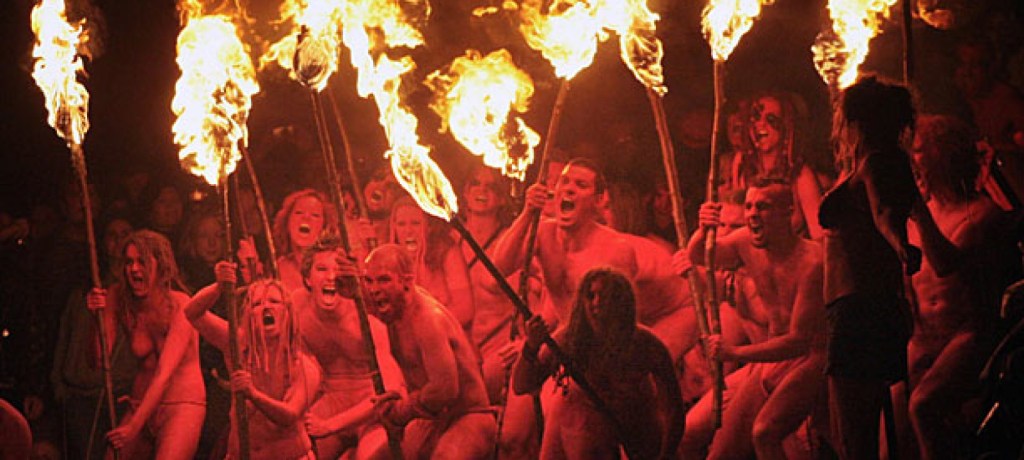
Getting hot and bothered at the Beltane Fire Festival (2009) in Edinburgh(Press Association via AP Images)

RESEARCH

Let´s welcome the summer, let´s cover the first Beltane Fire Festival created in 1988 and with a media of 12.000 people attending every year. BBC, STV, The Times and Getty Images, as well as The Scotsman, The Herald and Edinburgh Evening News.

Beltane show members of communities come together to celebrate the return of the summer. Is characterised by a celebration of the return of the fertility of the land, and would have been a time when livestock would have been put out to pasture. Blazing pyrotechnics, immersive theatre and people having fun are some of the entertainments of this day.

Creatures will descend on Calton Hill to mark the turn of the wheel. When the drums start to thunder, the May Queen awakens and leads the Green Man and their followers on a transformative journey through the night.

WHEN? Thursday 30th April, starting at 8.00pm (sundown) and finishing with the ritual lighting of the Neid fire. The event will close around midnight.

RADIO SCOTLAND AND OUR MAGAZINE “SCOTTISH ENTERTAINMENT”

As it is an Scottish tradition I think it will perfectly fit in their target audience. Edinburgh has one of the main events for Beltane but it is not the one, so it could even be good for them  to do different reports and do a special show to put them all as a package.

The main reason I selected to cover it is because I think it is a big event and it fits perfectly in the whole magazine idea. This festival attract the attention of journalists and media from across the world, from bloggers to headline news reporters. I personally went last year and I found it quite interesting and inspiring.

The aim of the documentary wil be to inform and entertain and as the BBC usually does, to advance the education of the general public bringing them how the traditions of the Celtic lunar calendar fire festivals and their relevance to contemporary culture.

Also, I think it will be good to promote participation in the Scottish traditions of street theatre, music and pageantry and to advance the performing arts through the development of skills in professional performance and production within a cooperative and collaborative environment.

INTERVIWEES

The idea is to make some of the interviews before this event wil happen, during the preparation and also take sounds the day of the event.

•Event Coordinator

•Green Man. The festival tells the story of the transition from winter to summer, which can only happen when the Green Man – an archetypal figure in folklore all over the UK – dies and is reborn again

•Members of different groups. Beltane Fire Society is entirely run by volunteers, festival performers and members of production groups also take part on a voluntary basis so I think these people will be happy to talk about whay they participate on it and tell us more about it.

•Vox pops of people attending to the event.

HOW I WILL DO IT

As the event has a chonological order, I will follow it as I present the doc.

It is a procession, which starts at the National Monument (know to Beltaners as the Acropolis) and proceeds anti-clockwise around the path meeting various groups along the way. The procession is driven by the beat of drums.

Beginning, mixing different sounds of how the show start and after it start introducing what´s this event explained by the people that organice it and the participants.

End up. Celebration sounds to welcome the summer. Finishing with the drums and the multiple sounds they make to celebrate the welcome of summer.

The main goal is to make a documentary upbeat, diverse and attractive that will make that the potential listeners could be able to teleport theirselfs to the event. For that I´ll focus on doing a good variety of interviews, use music and effects, as well as location recordings. The presenter style will be informal but not rude, using rich vbut undernstandable vocabulary.

SOCIAL MEDIA USE

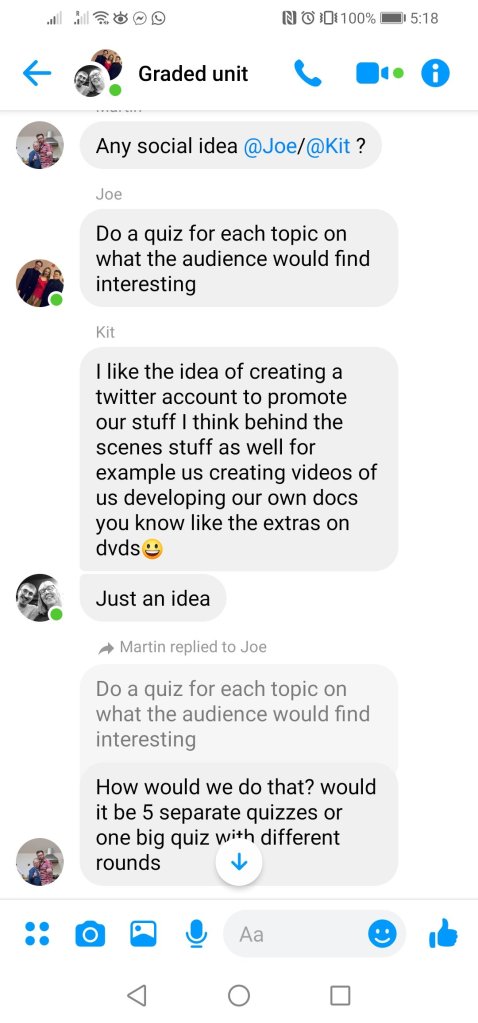
We considered different ways to promote the magazine. As we consider that social media now is the best platform to provide a rapid route to our audience we decided that creating a Twitter account with the name of the magazine could be a good idea to put all the content of the different documentaries together. Also, we thought in making pools and inform there of what will happen to try to engage new people. For that, publishing pictures, video promos of the interviewees could be the best option to attract the attention of more people. To catch new potential listeners interested on what we are going to cover it’s important to use hashtags with the topic we are talking about. Apart from that, we can use the network of other social medias as for example, from our own Facebook and Instagram accounts we can also share the different content we are publishing.

Another idea was to make a behind the scenes of the whole production cycle of everyone doing our documentary of different stages of the process and this could give us more attention to the project.

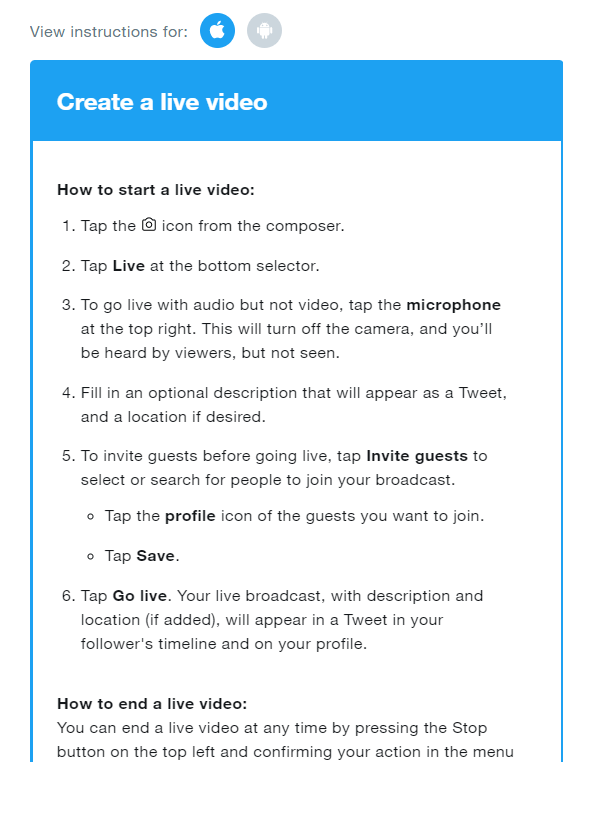
Also, for the day we are releasing the show Martin propose to do a video live stream of the whole the hour magazine where people could be able to interact and leave their comments. This is possible to do it from Twitter, so probably the account created for that would be the best to promote it using also live hashtags while he program is being broadcast. And it gives also the option to call a live guest, something a bit risky but maybe if the coronavirus still being as it is now, the only option to have a live one in the studio. These are the steps we will have to follow if we want to do that:

GROUP MEETINGS

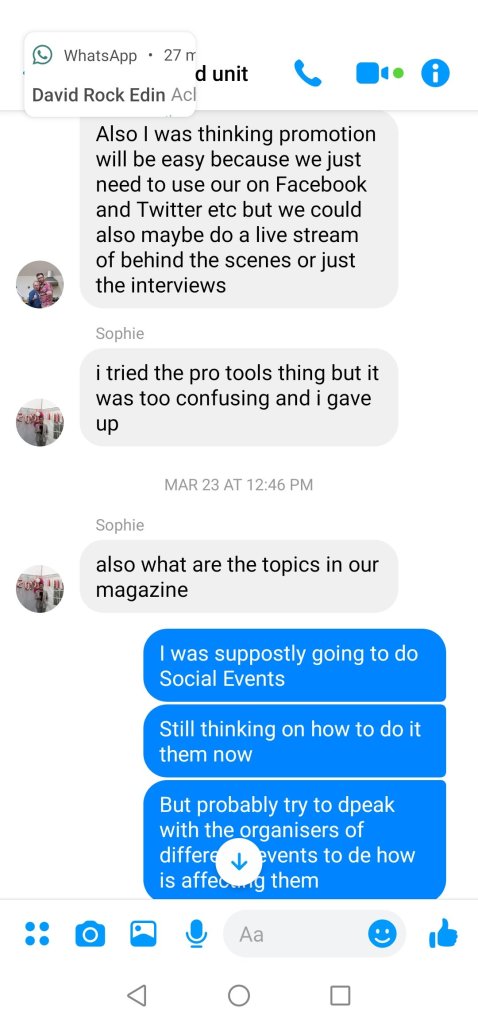
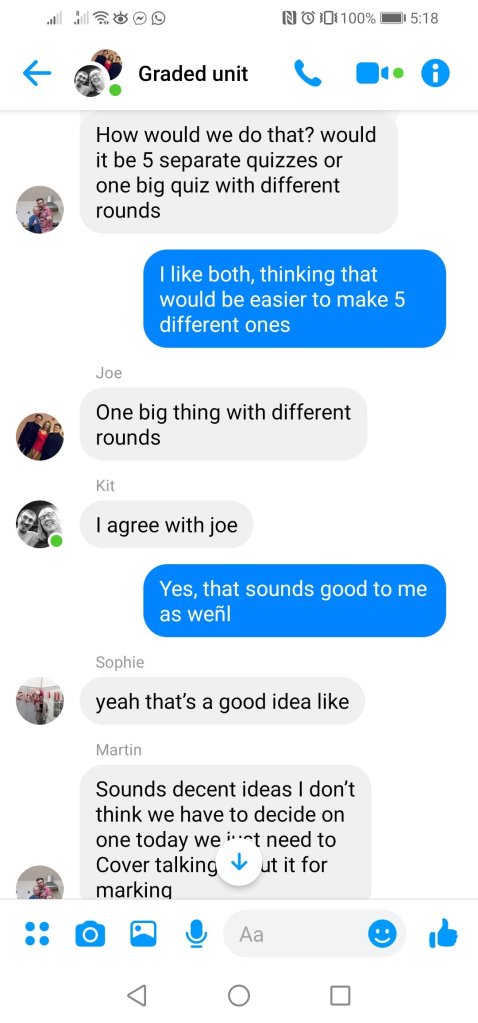
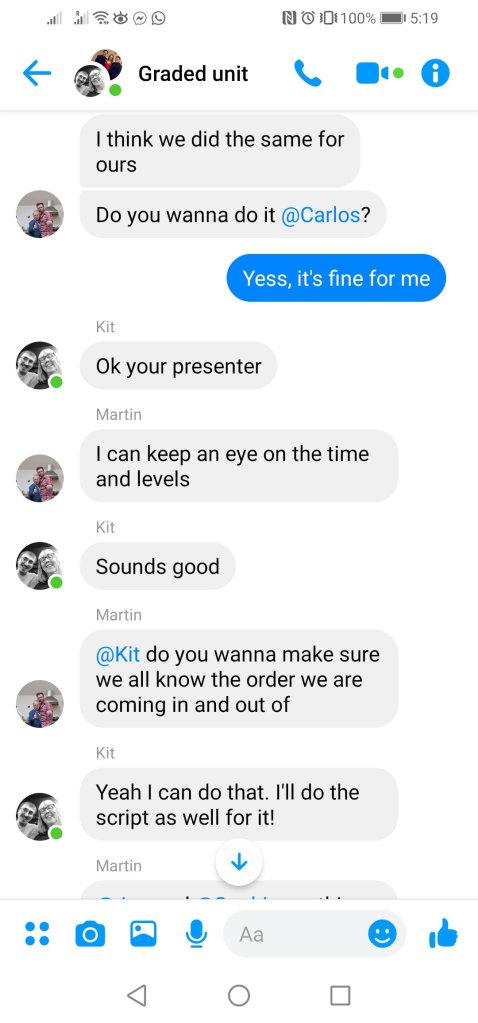
I leave attached different proofs of the team meetings we have been having to discuss about we are going to make our one hour magazine radio show.

Meeting 2/3/20 Here we discussed about the three ideas we all have for our documentaries and we also thought in what to do in case Emily leaves the course to fill the time of her documentary.

Meeting 9/3/20. We talked about live guests, which one could be a good candidate but we realise that till we won´t have the interviewees we won´t really know who could be. Once we contact them we all said that will be easier to tell them if they are interested in coming in to the studio and in case they are discuss in group what options do we have and pick the best one, or even two.

Meeting 16/3/20. I missed this meeting because of coronavirus. As my colleagues said on it I moved to Spain to pass the quarentene here, and as all of them were wondering, I also have been thinking on what to do because we all probably have to consider to change our documentary.

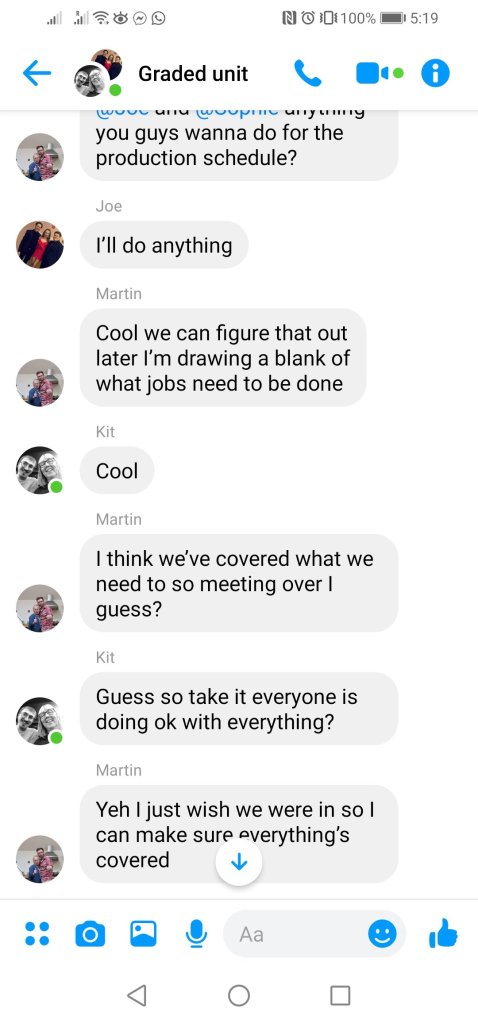
Meeting 23/3/20. We did it througjt the Facebook group and we discussed about the use of social media and what are going to be our production roles.

COSTS OF THE DOCUMENTARY

Equipment. I have access to the Zoom for the recordings and mybown record voice machine in case I could’t take that one from College.

Voice/presenter. According to the Actors Union, hiring a a presenter and bring it to the studio would be a minimum of 125£.

And if we look at differents feeelance guides they suggest to start negociating at this price for broadcast and report for the BBC or a National TV. http://www.londonfreelance.org/feesguide/index.php?&section=Broadcasting&subsect=BBC+and+national+TV

Reporting/production – day rate (novices straight from college) *GBP101.00

Counting on I´ll spent at least three days for the production, planning and making interviews plus two more days of editing that will make the price higher.

Studio hire. In case I can´t not use the College ones for free, I’ve chosen the Black Caves Recordings, using the s9fifty studio based in Glenrothes and they charge 30£ the our, what I think should be enough for recording my documentary. This includes full use of all studio equipment as well my time.

Travel. I’ll maybe have some travelling costs that I will have to put on the list, such as for example the fuel for going to Glenrothes, 48 km far away from Edinburgh.

WEEKLY DIARY

SCOTTISH ENTERTAINMENT

4/2/20

Group created and first team meeting done. The components of the group: Martin, Joe, Sophie, Kid, Emily and me. For the topic chosen as the headline says is Scottish Entertainment, and the radio chosen it could not be other than BBC Scotland Radio. From the discussion we also extracted different individual proposals. In my case, I decided to focus on live events and specifically I’ve got the idea today to cover Beltane Fire Festival.

We’ve decided to make a group meeting every Tuesday after 10 that is when Martin finishes the Breakfast show he’s doing.

As a group I think we have a clear idea of what we want to obtain as final result so we just have to work now in what are we specifically do to fit our documentaries in that general theme that is the Scottish entertainment.

11/02/20

We talked about the general theme we are going to cover and we have been thinking in more ideas for our personal documentaries and proposing them to see how they could fit on the package of Scottish Entertainment.

In my case, I decided that I want to cover the Social Life and Events part as I consider that the most important thing when we talk about entertainment.

18/02/20

We started making the project line to have a good perspective of the different timings we have to follow to have our documentaries ready to be presented by the end of may. As a group we continue discussing which topics or ideas will be good to develop. I proposed that even if it was not the original idea, if after a while any of us discover that they have a good story to cover we should go for it as we haven’t decide anything 100% yet. I start working in my mind what ideas can be good.

25/02/20

After being thinking which could be the best topic to cover I finally decided to do it about the Beltane Fire Festival as I think it is a big event and it fits perfectly in the whole magazine idea. This festival attract the attention of journalists and media from across the world, from bloggers to headline news reporters. I personally went last year and I found it quite interesting and inspiring . It´s a big tradittion in Scotland so everyone should enjoy it.

In addition, as this year they’ll donate part of the money to fight the climate change, specially attractive for young people that are the most conscious about this issue

The other two ideas I also thought could bee good were the Edinburgh Marathon and another one talking about the Rave Life in Edinburgh. Although I lked both, I found more complicated to do them.

The Edinburgh Marathon becase it´s going to be celebrated at the end of may so it´ll give me not that much time to take sounds there and editing all before the presentation of the magazine.

And the Rave Life one, I found it very interesting beccause is something original and not many medias have been talking about it. There´s a big movement here and now that the Spring season is close there are many more raves organised in different places around Edinburgh and I can maybe talk with the organisers to record there and also to ask them how this urban scene works and explain a bit more of it to people that are not aware of how this kind of partys are.

4/03/20

We started making our pitch. I decided to first start having a look of what other medias have done about the Beltane Festival, how they covered it and what´s the most attractive part to be presented.

11/03/20

We presented of our documentary pitchs. I decided to apart from the slides was a good idea to incorporate some audio ambience and I selected a YouTube video about the trailer of this edition where you can hear the drums and other typical noises of the spectacle.

2 days later…

The coronavirus is not a joke anymore. I took the decision of coming back to Madrid to pass the quarentene at home with my family. I predict that this is going to happen soon in Edinburgh and I have no money and no work to stay here as I´d like to. I talked with Conor to tell him and he completely undertsand the situation. Probably, the same restrictions that Spain is taking at the moment are going to be taken here and the College will be close.

18/3/20

First Graded Uni class cancelled because of the coronavirus. Is time now to work at home and probably change the idea of our doc. I already started to think in more posibilities as the Beltane Festival is also probably going to be cancelled.

25/03/20

First week working at home. I get the reply from the Beltane Fire Festival press and they told me that although they´ll not be able to put me in contact with the volunteers that participate on it, I could do an interview to the chair of the organization. I wonder if he could be a good live guess for the magazine but I decided to be in contact with him to propose this directly if that´s the case.

I still consider do it about this and I starte to try to find by my own people that were going to participñarte in the festival to see if theycan be potential interviewees. If not, I also have a Plan B that will be to change the angle of the documentary and talk about other bieg events that were going to be celebrated in Edinburgh and they´ve been cancelled because of the coronavirus.

1/04/20

This week was time to finish updating the blog and upload all the proofs of the different groups meetings we have been having to talk about the content of the magazine.

ANALYSIS OF GRADED UNIT

In this post I am going to talk about the 1 hour show I’m going to prepare for the radio course I am doing in the Edinburgh College. I’ll be working in a group where every decision we are going to make is gonna be discussed every week. Expecting that we are going to have some hands in dates we will need to make a timing schedule to be able to meet those goals before the date due to. In case someone won’t do it must be needed to have a plan B, readapting our work in order to present a good project.

The individual work we will all have to do is a specific documentary that will fit in the 1 hour show style. The length will be between 6 and 8 minutes and it needs to have at least 3 interviews, so contact these people to get them confirmed is one of the first things that must be done. If the interviews are good then will be easier to make the editorial choice of what we want to include in the documentary.

Between all these decisions, the most important one is going to be in which radio station we would like to include our show, thinking in which could be the target audience is going to be directed to and the rhythm and style we are more interested in. Paying special attention to aspects as the age and the hobbies of the people that could be our audience will be also important in the choice of our documentary. They obviously have to match with the target audience of the station we would like to broadcast in. So we also have to consider other aspects as interests, social life and technology knowledge of the potential listeners.

Ideally, we are going to think also in which requirements could ask the radio station in case they would like to introduce our show in their schedule. That’s why will be necessary to make a good planing and structure of what we want to do. Type of show we want to make, timing for each one of us and how are we going to split the production work. We also have to include in our show a guest that could come on live when the show will be broadcasted. For that, getting this person confirmed with enough time in advance will make the difference.

For al of that, a good research in our topic will help us to find the correct people and what to ask them, giving us the capability of preventing what they could say to us and because of that, making better questions.

Under the ethics points we will have to follow, being fair and objective about what we are going to do will be important, such as always give the different points of view about we will talk to not just present one of the versions as the absolute truth. Here, including facts and figures for give arguments that re-enforce our angle will be the key.

Another thing is that the language has to be appropriate, not using offensive words and trying to choose always the better way to say or explain what we are talking about, thinking always in not discriminate any collective because of the terms we use. Especially slanderous comments.

Also, another ethic point will be to tell the people we interview the nature and purpose of the programme, what the programme is about and be given a clear explanation of why they were asked to contribute and when (if known) and where it is likely to be first broadcast. For that, they will have to read and agree a form, as a proof that they have been told which kind of contribution they are expected to make, for example live, pre-recorded, interview, discussion, edited or unedited.

About the legal issues we will have to deal with, the broadcast should conform to Ofcom rules, complying with relevant legislation such as the Public Records Act, Data Protection Act, Freedom of Information Act and the Code of Compliance on Records Management.

Also, if we want to play any protected music we need to be sure that we have the PPL and PRS licenses to be able to play any music rights reserved. As we studied in the law modules, we will maybe need to comply some of the Acts that cover a specific group of people as for example informing about kids.

In terms of health and safety I will have to fill a form to ensure I am aware of all the risks I can find doing my documentary and even if I consider them ore or less important I’ll have to analyse what is involved.

COSTS OF THE DOCUMENTARY

Equipment.

Voice/presenter. According to the Actors Union, hiring a a presenter and bring it to the studio would be a minimum of 125£

Studio hire. I’ve chosen the Black Caves Recordings, using the s9fifty studio based in Glenrothes and they charge 30£ the our, what I think should be enough for recording my documentary. This includes full use of all studio equipment as well my time.

Travel. I’ll maybe have travelling costs that I will have to put on the list, such as for example the fuel for going to Glenrothes, 48 km far away from Edinburgh.

Create your own website, free on WordPress.com.Create your own website.
Start free